



What to Know About HSAs & FSAs for Massage in 2026
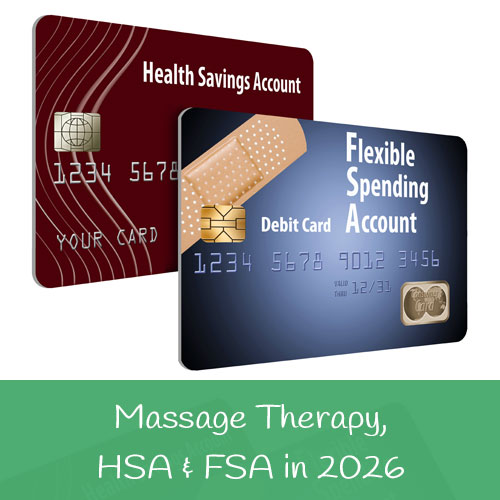
If you use massage therapy as part of your health or wellness routine, or you’re trying to stretch your tax-advantaged dollars, understanding changes to HSAs and FSAs are important.
Read more to learn:
– What changed in 2026
– Who’s eligibe to use HSAs and FSAs for massage
– And more!
Key HSA & FSA Changes in 2026
The biggest updates for 2026 focus on:
- Expanded access
- Higher contribution limits
- Clearer guidance around eligible expenses
While massage therapy rules themselves haven’t drastically changed, the surrounding HSA and FSA structures have become more flexible. This can indirectly benefit those using available benefits for therapeutic massage.
2025 vs. 2026: Side-by-Side HSA & FSA Changes
| Category | 2025 Rules | What Changed in 2026 |
|---|---|---|
| Massage Therapy Eligibility | Allowed only with medical necessity | Same rule, but clearer enforcement and documentation standards |
| HSA Eligibility | Limited to traditional high-deductible health plans (HDHPs) | Expanded to include some lower-cost and alternative plan structures |
| Telehealth & HSAs | Temporarily allowed pre-deductible telehealth | Permanently allowed without affecting HSA eligibility |
| HSA Contribution Limits | Lower annual limits | Modest increase to keep pace with inflation |
| Health FSA Contribution Limit | $3,300 | Increased to $3,400 |
| Health FSA Carryover | Up to $660 (if plan allows) | Increased to $680 |
| Dependent Care FSA Limit | $5,000 | Increased to $7,500 |
What This Means for Massage Therapy in 2026
Massage therapy remains a conditionally eligible expense under both HSAs and FSAs. The IRS still distinguishes between massage for general wellness or relaxation and massage used to treat a diagnosed medical condition.
Massage Can Be HSA/FSA-Eligible If:
- A licensed healthcare provider diagnoses a specific condition (such as chronic pain, injury recovery, migraines, or musculoskeletal dysfunction)
- The provider recommends massage as part of a treatment plan
- You obtain a Letter of Medical Necessity (LMN) outlining the condition and duration of care
Massage Is Not Eligible If:
- It’s used solely for stress relief, relaxation, or self-care
- There is no documented medical diagnosis
- No supporting documentation is kept on file
The good news for 2026 is not that massage became automatically eligible (it didn’t) but that larger contribution limits and broader account access mean people have more flexibility to use these funds when massage is medically justified.
Why Do These Changes Matter for Wellness Planning?
With higher FSA limits, expanded dependent care benefits, and more accessible HSAs, individuals and families can better plan for comprehensive healthcare. This includes complementary therapies like massage when clinically appropriate.
These updates also make it easier to:
- Budget for long-term therapeutic care
- Reduce out-of-pocket costs through pre-tax savings
- Coordinate care between medical providers and licensed massage therapists
If massage is part of your treatment plan, the key to using tax-advantaged funds safely is:
- Understanding the rules
- Keeping documentation
- Coordinating with your healthcare provider