



What a Knot is and How to Prevent Them
Jump to topic:
What is a Knot? | Why Knots Don’t Go Away on Their Own | Why is Massage Used to Treat Knots | What Treatment Looks Like | What Can You Do to Prevent Knots
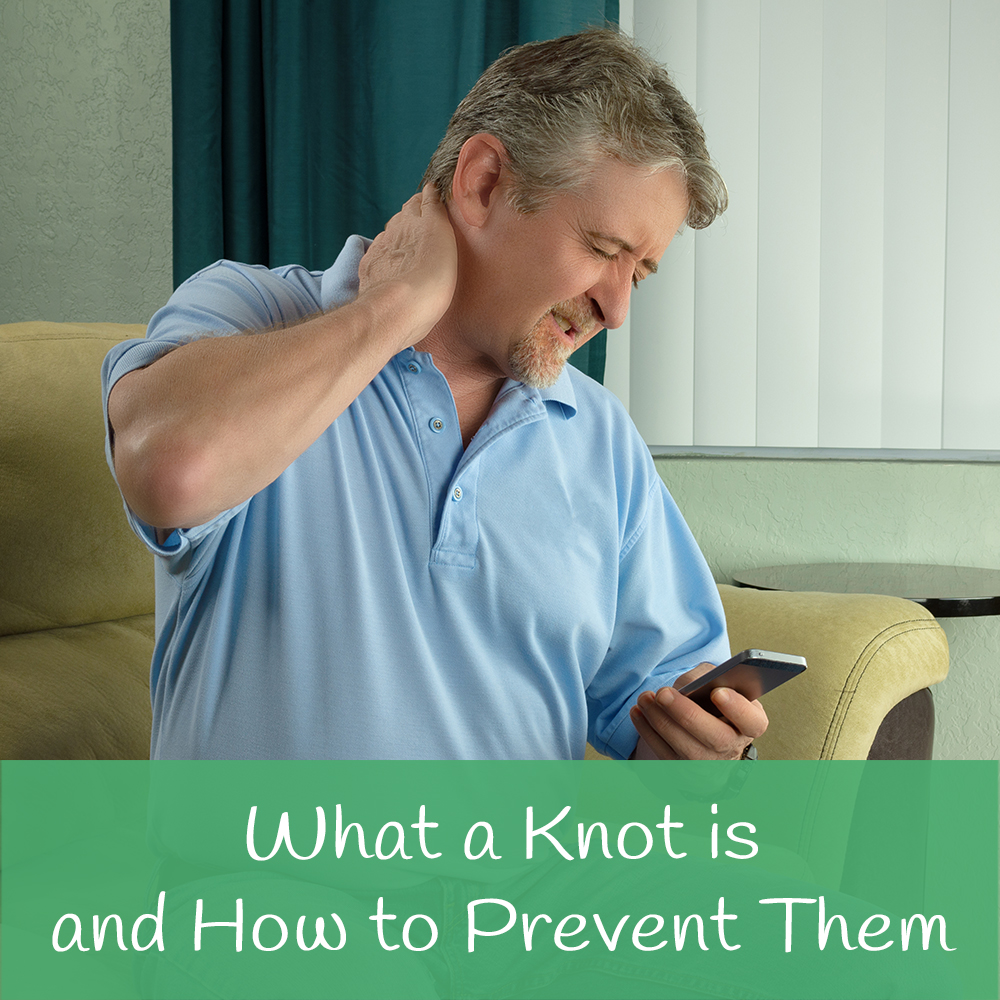
The good ol’ muscle knot, scientifically called a myofascial trigger point, is something that many of us have or are suffering from. They are knotty and knot pleasant at all! 😉
Understand what a knot is, how to prevent them and how massage therapy is used to treat them once they develop.
What is a Knot?
A knot is not actually what the name implies. It happens when a small patch of muscle gets stuck in a contracted state and can’t release. Within your skeletal muscle, individual fibers are supposed to contract and then let go. When they don’t let go, a cluster of those fibers stays locked in a contracted state. Blood flow to the area reduces and waste products build up. The fascia (surrounding connective tissue, wrapped around the muscle) can stiffen as a response. Common causes for knots are:
- Overuse
- Trauma
- Poor circulation
- Sustained tension
These factors result in a sensitive lump that’s tender to the touch and can also cause referred pain (pain in places other than the knot). This seemingly non-associated pain happens when you press a trigger point, confusing your nervous system about where the signal is coming from.
Trigger points often develop in predictable locations. Some common places are:
- The upper trapezius (between your neck and shoulder)
- The levator scapulae (runs along the back and side of your neck)
- The rhomboids (between your spine and shoulder blades)
- The piriformis in the hip (a small, flat muscle buried deep in the glute)
- The muscles along the base of the skull
Why Knots Don’t Go Away on Their Own
Unfortunately knots don’t just go away over time. Resting, stretching and taking ibuprofen may help a bit but it won’t fully treat it. It might only hurt when it’s touched, which is called a latent state.
The reason why trigger points don’t go away on their own is that they are self-sustaining. The tight tissue restricts blood flow, so the muscle doesn’t get enough oxygen. The tissue then creates chemical irritants that make the nerve endings sensitive and, by doing so, signal the muscle to stay contracted.
Why is Massage Used to Treat Knots
Massage treats the trigger points by treating them as separate issues that contribute to one whole problem, the knot.
Direct Pressure
Direct pressure on a trigger point (ischemic compression) temporarily reduces blood flow to the area when pressure is applied, then floods back when the pressure is released. This flush-out effect helps clear the built-up waste products responsible for keeping the nerve endings agitated. Most therapists will hold pressure on a trigger point until they feel the tissue soften slightly under their fingers.
Friction and Cross-Fiber Techniques
By moving across the grain of the muscle fibers, a therapist can break up adhesions in the fascia and stimulate mechanoreceptors (sensory receptors, when activated, can mute pain signals through a mechanism called the gate control effect) in the tissue. The right kind of touch can override the pain your nervous system is generating from that spot.
Swedish Style Massage
Broader Swedish-style strokes, like effleurage and petrissage, improve overall circulation to the area which helps before and after more focused trigger point work.
The Neurological Component
Muscle tension can also stem from your emotions, such as:
- Chronic stress
- Anxiety
- Emotional holding patterns
These stressful emotions keep the nervous system in a low-grade fight-or-flight state that manifests in muscle tissue, like knots. Massage activates the parasympathetic nervous system, reducing cortisol and inducing a body-wide relaxation that aids in muscle relaxation.
How Massage Therapists Treat Knots
Hands-On Massage
Pressing a trigger point causes a pain described as a “good hurt”. Your massage therapist will ask for feedback on their pressure to stay within the therapeutic window, applying just enough pressure that your body doesn’t brace against it. Basically, too much pressure that causes excess pain will do you more harm than good.
Dynamic Cupping
Dynamic cupping is another effective treatment for muscle knots. Unlike static cupping, where the cups remain in one place, your massage therapist will glide them across the affected areas. Here’s why this method helps significantly.
Tissue Decompression
Cupping lifts the skin and superficial fascia. This reduces the compression felt at the trigger point and is often used when the knot is too tender for the required pressure.
Improved Circulation
Moving the cup around increases the blood flow in the area. This helps recovery by bringing oxygen and nutrients to the tight knot.
Neural Relaxation
Suction and movement can help the nervous system relax. This allows the muscle to relax and let go.
Range of Motion
During dynamic cupping, your massage therapist will guide you through movements in the areas where you feel discomfort or restricted range of motion while simultaneously gliding the cup across your skin. This combination helps release tension and restore normal movement.
Most people notice some relief during or immediately after a session. Deeper and/or more serious knots could need more than one session to feel noticeable improvement, especially if you’ve had it for months to years.
Aftercare
Aftercare is a crucial step to ensure the progress made during the massage is maintained. What you can do to help the muscle stay relaxed and not revert is:
- Staying hydrated
- Applying heat
- Gentle stretching in the days following a session
What Can You Do to Prevent Knots
Trigger points are often developed due to repetitive actions, such as:
- Prolonged sitting
- Repetitive motion
- Poor ergonomics
- Chronic stress
Massage can help fix your knot, but if the habits that gave you the knot don’t change then the problem will continue to occur. Whether that’s adjusting your work setup, strengthening underused muscles, finding new ways of managing stress, or getting more steps in, finding what is causing knots is what really makes a difference in preventing them.
Knots don’t just appear overnight. They are built up over months of the same postures, tension and movements. Massage can help a lot, but understanding what caused it in the first place is how you stop them for good.